What to Specify for Storage Tank Fabrication

TL;DR:
- Specify Ra 0.8 µm or finer for interior contact surfaces; electropolishing is for higher-risk applications only, not a routine upgrade.
- Specify full-penetration TIG welding with ground internal seams and get it documented in scope before fabrication begins.
- Dead legs, poor drain angles, and inadequate spray ball positioning undermine automated cleaning regardless of chemical strength or cycle length.
- Request borescope inspection records and surface finish certificates at handover. Both are HACCP compliance evidence and far harder to obtain after delivery.
Specifying the right grade of stainless steel is not enough. Many food and beverage operators commissioning storage tank fabrication in Malaysia put careful thought into material selection and very little into the internal geometry, surface finish, and fitting layout that actually determine whether a tank can be cleaned effectively. An automated cleaning system cannot compensate for a tank that was not designed with cleaning in mind. Hygienic tank design refers to the set of fabrication decisions, surface finish, internal geometry, fitting placement, and weld quality, that determine whether a vessel can be cleaned completely without disassembly. It can only work with what the fabrication gives it.
This article covers the 4 fabrication areas that most directly affect cleaning system outcomes:
- Interior surface finish and Ra value specification
- Weld quality and internal seam standards
- Spray ball positioning and coverage
- Drain angles, fitting geometry, and dead leg prevention.
Getting these right at the brief stage is significantly less costly than correcting them after delivery.
Why Your Cleaning System Succeeds or Fails at the Fabrication Stage
An automated cleaning system works without disassembly. It relies entirely on the tank's internal geometry to allow cleaning solution to reach every surface and drain completely without manual intervention. Any feature that traps liquid or creates a recess the spray cannot reach will undermine the entire cleaning cycle, regardless of chemical concentration or cycle duration.
Fabricators who do not specialise in hygienic design or industrial tank design standards will not automatically account for these requirements. You need to raise them explicitly in your brief, and ideally before the fabrication drawing is finalised. Changes after cutting has begun carry both cost and lead time consequences.
If you are not certain your fabricator has experience with hygienic tank design, it is worth having that conversation before drawings are signed off.
Speak to the team at Choong Ngai Engineering about your project requirements before committing to a build.
What Ra Value Should You Specify for a Food-Grade Storage Tank?
For most food-grade stainless steel tanks, Ra 0.8 µm or finer is the standard surface roughness specification for internal contact surfaces. This level of smoothness is necessary to prevent microbial adhesion and allow chemical cleaning to work effectively. Surface roughness is measured as an Ra (Roughness Average) value, expressed in µm. A lower Ra indicates a smoother finish.
Verify the applicable standard against your regulatory framework before specifying for dairy, beverage, and nutraceutical applications, as some markets or product categories may require a finer finish.
For higher-risk applications, electropolishing is worth specifying explicitly. Applied after mechanical polishing, it removes surface irregularities at a microscopic level and produces a superior surface profile with improved passive layer integrity, which is why it is specified for higher-risk applications rather than as a general replacement for mechanical polishing. Confirm with your fabricator whether this is included in their standard scope or priced separately. Ask for a surface finish certificate at handover as part of your compliance documentation.
What Weld Standard Does a Food-Grade Tank Actually Need?
Internal weld seams are among the most common sources of contamination in food-grade tanks. Pits, undercutting, or raised beads create irregularities where residue accumulates between cleaning cycles and where the spray may not penetrate consistently.
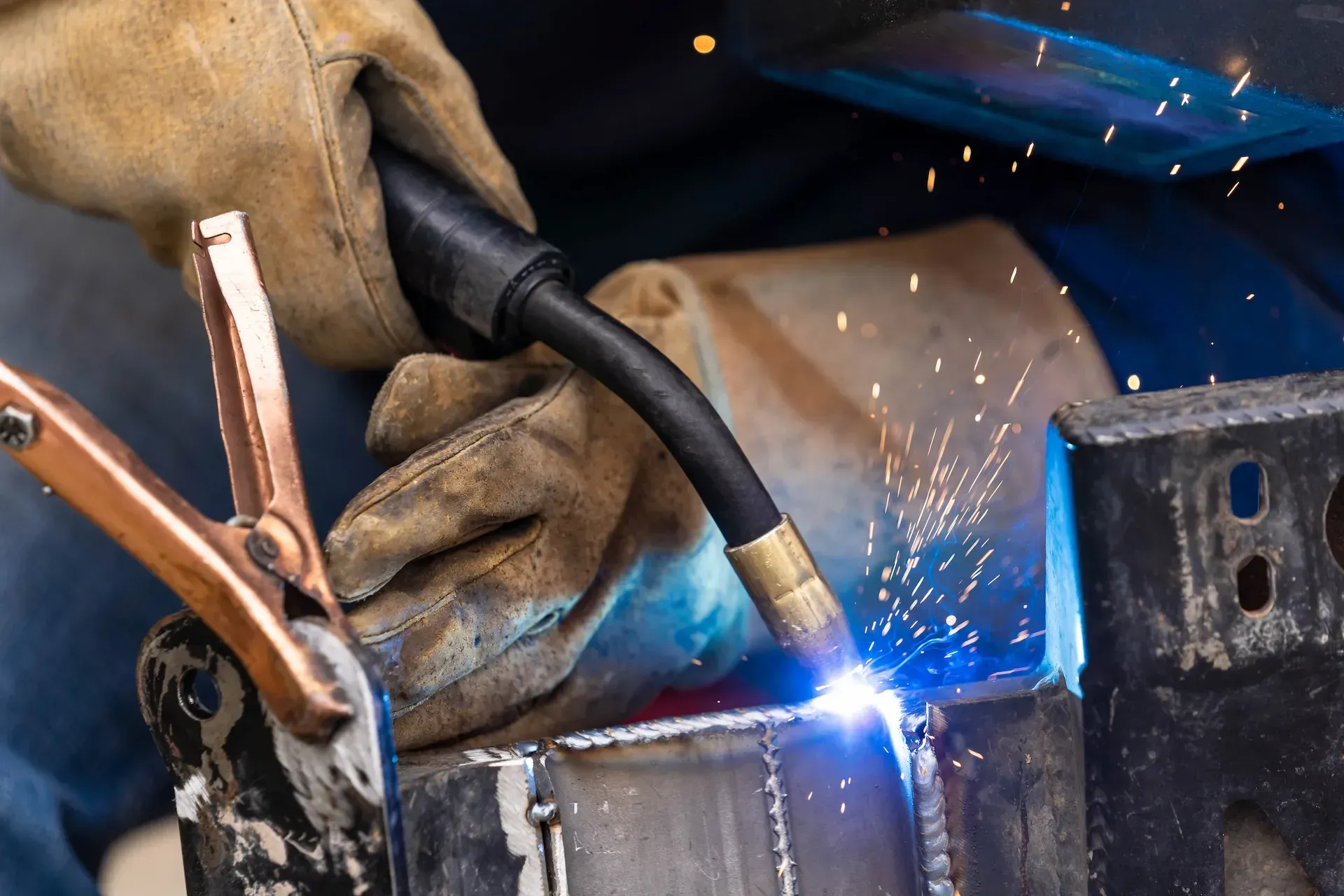
The baseline requirement for food-grade tank fabrication is full-penetration tungsten inert gas (TIG) welding with ground and polished internal seams. TIG welding produces a cleaner, more controlled weld than other processes and is the standard method for sanitary stainless steel fabrication. Confirm this is documented in your fabrication scope, and ask how internal seam quality is verified before delivery.
For pharmaceutical, nutraceutical, or export-facing production, consider requesting borescope inspection records. Borescope inspection uses a small camera to document weld quality along the interior of the vessel. This kind of documentation is increasingly expected as part of hazard analysis and critical control points (HACCP) compliance evidence, and it is far easier to obtain at the fabrication stage than retrospectively.
| Area | What to ask | When |
|---|---|---|
| Surface finish | Is electropolishing in scope or priced separately? | At brief stage |
| Surface finish | Can you provide a surface finish certificate at handover? | At handover |
| Weld quality | Is full-penetration TIG welding with ground internal seams documented in scope? | At brief stage |
| Weld quality | How is internal seam quality verified before delivery? | Pre-delivery |
| Weld quality | Can you provide borescope inspection records? | Pre-delivery |
Not sure whether your storage tank fabrication services can meet these weld and documentation requirements in Malaysia?
Send your project brief to Choong Ngai Engineering and their team can confirm what is achievable and what needs to be built into scope from the outset.
The Geometry Details That Determine Whether Your Automated Cleaning System Works
3 geometry decisions made at the fabrication stage determine whether your automated cleaning system can do its job: spray ball positioning, drain angle, and dead leg prevention.
Spray ball positioning needs to be engineered to your tank's specific internal geometry. A single centrally mounted spray ball will not achieve full coverage in tanks with agitator mounts, internal baffles, or irregular profiles. Ask your fabricator to confirm that spray coverage calculations are part of the design process, and specify that no internal fitting should leave a surface the cleaning solution cannot reach.
Drain angle matters just as much. The tank base should be sloped to allow complete self-drainage at the end of each cleaning cycle. Where liquid cannot drain by gravity, it becomes a contamination risk between cycles regardless of how well the automated cleaning system performed.
All nozzles, sample ports, and instrumentation connections should be positioned to avoid dead legs. A dead leg is a section of pipework or a recessed fitting that sits beyond the active cleaning flow path, where liquid stagnates rather than draining. Dead legs are a recognised contamination risk in hygienic system design, supported by guidance from both EHEDG and pharmaceutical processing standards. They are preventable when addressed at the drawing stage.
For all sanitary connections, specify tri-clamp fittings throughout. Threaded fittings are harder to inspect and more difficult to clean consistently, and are generally not appropriate for food-grade or pharmaceutical tank applications.
Before finalising your fabrication brief, confirm:
- Spray coverage calculations are confirmed for your tank's specific geometry, including any agitator mounts, baffles, or irregular profiles.
- No internal fitting creates a spray shadow or an unreachable surface.
- Tank base is sloped for complete self-drainage at the end of each automated cleaning cycle.
- All nozzles, sample ports, and instrumentation connections are positioned outside the dead leg zone.
- Tri-clamp fittings specified throughout (no threaded alternatives).
Plan Your Storage Tank Build with Choong Ngai Engineering
If you are planning a food-grade stainless steel tank build and need a fabricator who can work from a detailed hygienic specification, Choong Ngai Engineering fabricates SS304 and SS316 stainless steel storage tanks for food processing, dairy, beverage, and pharmaceutical applications in Malaysia. Their tanks are fabricated with pressure-tested welds, custom fitting layouts including spray balls, agitator mounts, and nozzles positioned to your process requirements, and traceable handover documentation compiled at delivery.
Whether your application calls for a standard vessel or a fully customised build, getting the specification right at the brief stage protects both your commissioning timeline and your compliance position.
Contact Choong Ngai Engineering to request a quote or discuss your storage tank fabrication requirements in Malaysia.