Galvanising vs Powder Coating: Malaysian Industry Solutions
TL;DR Section:
- Metal coating systems as galvanising offer 15-30+ years protection with minimal maintenance through sacrificial zinc protection that continues working even when damaged
- Powder coating provides 15-20 years service with superior aesthetics and customisable appearance but requires intact surface to maintain protection
- Environmental factors determine optimal coating choice: galvanising excels in high humidity and alkaline conditions while powder coating performs better in acidic environments
- Application-specific selection is crucial: heavy equipment benefits from galvanising's impact resistance; precision components favour powder coating's dimensional control
- Cost considerations favour galvanising for lifetime value despite higher initial investment due to minimal maintenance requirements
- Duplex systems combining both technologies provide optimal protection in extremely demanding environments
- Quality surface preparation remains the critical factor determining coating performance regardless of selected technology.
Selecting the right protective coating for metal components directly impacts longevity, performance, and cost-effectiveness. The tropical climate conditions of high humidity, frequent rainfall, and occasional exposure to saltwater environments create specific challenges that require tailored metal protection strategies.
This article examines galvanising and powder coating, providing comparative technical insights for informed industrial decisions.
Understanding Industrial Metal Finishing Techniques
Metal finishing techniques enhance both protection and aesthetics while extending component lifespan. With environmental conditions posing significant challenges to metal integrity, appropriate finishing selections become critical for infrastructure maintenance and operational efficiency.
Galvanising and Powder Coating: Processes and Benefits
Galvanising applies a protective zinc coating to steel or iron through 3 primary methodologies:
- Hot-Dip Galvanising: Metal is immersed in molten zinc at approximately 450°C, creating a metallurgically bonded coating with zinc-iron intermetallic layers.
- Electrogalvanising: An electroplating process depositing a thinner, more uniform zinc layer, ideal for precision components requiring tight tolerances.
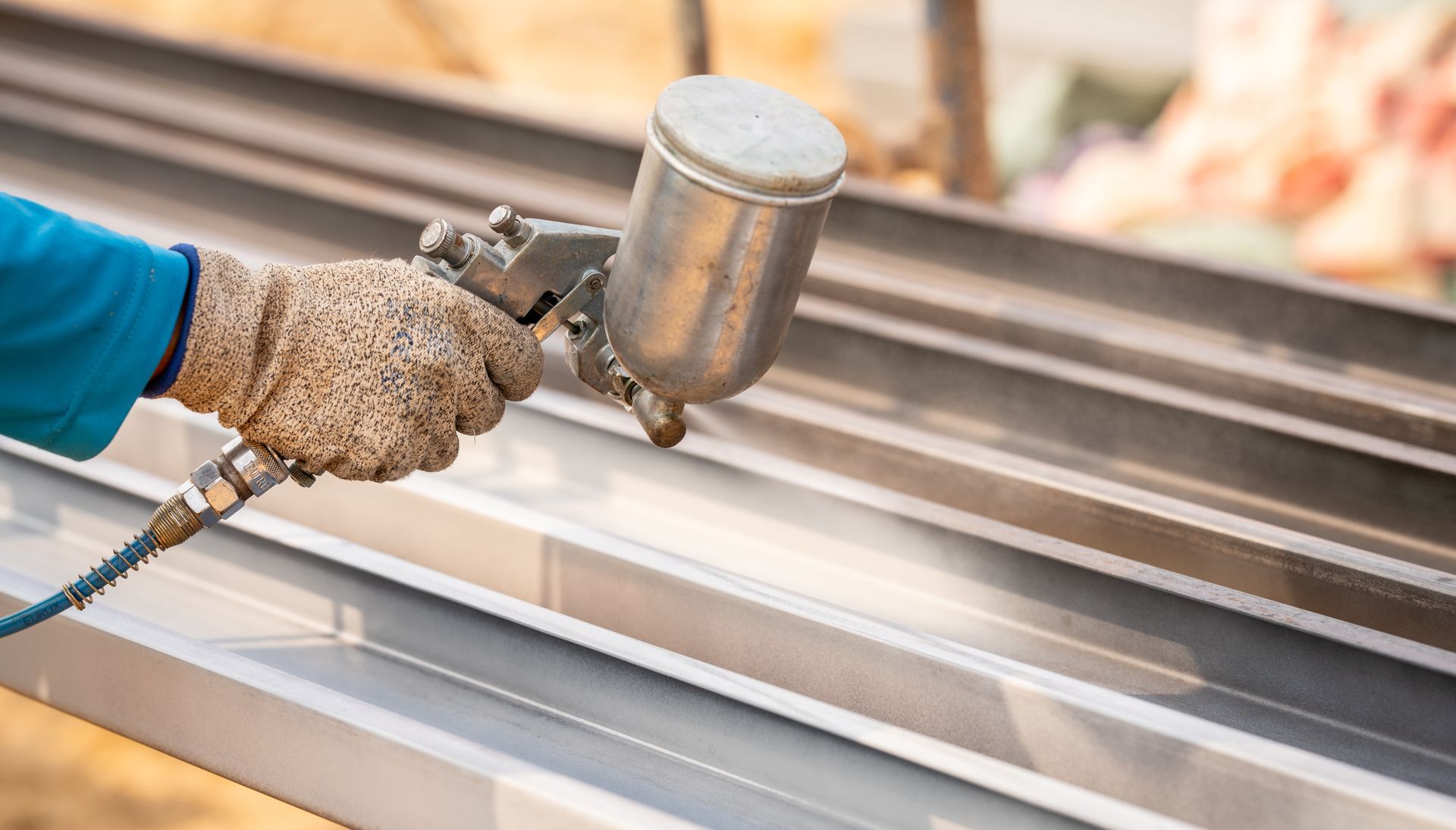
- Metallising/Metal Spray Coating: Zinc wire or powder is melted and sprayed onto the metal surface, creating a mechanical bond suitable for on-site applications and large structures.
The primary advantage lies in zinc's sacrificial protection mechanism, which corrodes preferentially to steel, protecting the underlying metal even when coating damage occurs.
Powder coating involves electrostatically charged powder particles adhering to grounded metal surfaces. After application, the coated item enters a curing oven where the powder melts and forms a uniform film. This process delivers:
- Superior aesthetic finishes with extensive colour options
- Chemical resistance against industrial contaminants
- Minimal volatile organic compounds (VOCs)
- Resistance to chipping, scratching, and fading.
Both techniques have established technical credibility in industrial applications, with selection criteria including specific environmental exposures and performance requirements.
Comparative Analysis of Metal Coating Systems for Malaysian Industries
When evaluating coating options for industrial applications, performance metrics must be weighed against specific environmental challenges. Both galvanising and powder coating offer distinct advantages depending on exposure conditions and service requirements.
Durability, Corrosion Resistance and Cost Considerations
Compare the essential performance metrics of leading metal coating technologies to determine optimal protection for your specific industrial requirements:
| Performance Factor | Galvanising | Powder Coating | Metal Spray Coating |
| Service Life | 15-30+ years maintenance-free | 15-20 years with maintenance | 10-25 years depending on application |
| Initial Investment | Higher upfront costs | Lower initial investment | Moderate costs, economical for field application |
| Maintenance Requirements | Minimal maintenance | Periodic inspection and potential reapplication | Occasional touch-ups in high-wear areas |
| Protection Mechanism | Sacrificial (continues protecting even when damaged) | Barrier protection only | Semi-sacrificial depending on composition |
| Coating Thickness | 45-85 microns typical | 60-100 microns typical | Variable 50-250 microns |
| Damage Resistance | Self-healing through sacrificial action | Vulnerable at breach points | Moderate self-healing properties |
| Life-Cycle Cost | Lower long-term costs despite higher initial investment | Higher lifetime costs in aggressive environments | Moderate lifetime costs, economical for repairs |
| Best Applications | Structural elements, framework, aggressive environments | Aesthetic finishes, controlled environments | On-site application, repairs, heat-sensitive components |
Metal Coating Performance in High-Humidity and Chemical Environments
Evaluate how each coating technology performs across critical environmental challenges commonly faced in Malaysian industrial settings:
| Environmental Condition | Galvanising Performance | Powder Coating Performance | Best Choice For Condition |
| High Humidity (>80% RH) | Excellent resistance through sacrificial protection | Good to excellent depending on formulation and application quality | Galvanising for structural components, powder coating for non-structural elements |
| Acidic Environments | Fair to poor resistance (pH <4 accelerates zinc corrosion) | Good to excellent resistance with proper formulation | Powder coating or specialised systems |
| Alkaline Environments | Excellent resistance up to pH 12 | Variable performance depending on formulation | Galvanising for most alkaline exposures |
| Saltwater/Coastal Exposure | Excellent resistance through sacrificial mechanism | Good resistance if coating remains intact | Galvanising or duplex systems for optimal protection |
| Industrial Pollutants | Variable depending on specific contaminants | Can be formulated for specific chemical resistance | Application-specific selection required |
| UV Radiation Exposure | Excellent resistance, minimal degradation | May experience colour fading and chalking over time | Galvanising for UV resistance, powder coating with UV stabilisers for aesthetics |
| Abrasive Conditions | Good resistance through harder zinc-iron layers | Fair resistance, susceptible to mechanical damage | Galvanising for abrasive industrial environments |
| Temperature Fluctuations | Excellent thermal cycling resistance | May crack with extreme thermal cycling | Galvanising for wide temperature variations |
Uncertain about protection requirements? Contact our qualified engineers who understand Malaysia's unique environmental challenges. Prevent costly production downtime and extend component life by selecting the optimal protection system for your specific industrial application.
Industry-Specific Applications and Selection Criteria
Different industrial sectors face unique metal protection challenges requiring tailored coating approaches. Understanding application-specific requirements helps optimise selection based on both performance and economic considerations.
Heavy Equipment vs Precision Components: Coating Requirements
Select the optimal coating solution based on your industry sector and specific application requirements with this comparative guide:
| Industry Application | Recommended Coating | Key Benefits | Typical Service Life |
| Heavy Construction Equipment | Hot-dip galvanising | Impact resistance, abrasion protection, field repairability | 15-25+ years |
| Agricultural Machinery | Hot-dip galvanising or duplex systems | Chemical resistance, weathering protection, abrasion resistance | 15-20+ years |
| Precision Electronics Housings | Powder coating | Aesthetics, dimensional precision, non-conductive surface | 10-15 years indoor |
| Architectural Components | Powder coating or duplex systems | Custom colours, UV resistance, visual appeal | 15-25 years with maintenance |
| Chemical Processing Equipment | Application-specific selection | Chemical resistance to specific process environments | Varies by environment |
| Marine Infrastructure | Hot-dip galvanising or metal spray | Saltwater resistance, sacrificial protection | 15-20+ years with inspection |
| Automotive Components | Powder coating for external, E-coat + powder for chassis | Aesthetics, chip resistance, corrosion protection | 8-15 years depending on exposure |
| Food Processing Equipment | Powder coating or stainless steel | Hygienic surface, chemical resistance, cleanability | 10-15 years with proper maintenance |
| Industrial Racks & Storage | Hot-dip galvanising | Durability, impact resistance, low maintenance | 20+ years in indoor environments |
| HVAC Components | Galvanised for internal, powder coating for external | Condensation resistance, appearance where visible | 15-20 years |
| Electrical Enclosures | Powder coating | Electrical insulation, appearance, weather resistance | 15+ years with proper installation |
| Heat-Sensitive Components | Metal spray coating | Thermal protection during application, customisable thickness | 10-15 years depending on exposure |
Surface Preparation and Maintenance in Metal Coating Systems
Surface preparation quality determines coating performance. Industry standards align with international specifications like ISO 8501 and ASTM D7803.
Galvanising preparation:
- Degreasing to remove contaminants
- Acid pickling to remove mill scale
- Fluxing to prevent oxidation.
Powder coating preparation:
- Contaminant removal through cleaning
- Surface profile development
- Conversion coating application
- Immediate coating to prevent flash rusting.
Maintenance requirements differ. Galvanised coatings need minimal maintenance beyond occasional inspection. Powder coated surfaces benefit from regular cleaning with mild detergents to remove contaminants that could potentially degrade the coating.
Making the Right Selection for Your Metal Protection Needs
Selecting between galvanising and powder coating requires technical evaluation of:
- Environmental exposure conditions
- Service life requirements
- Aesthetic specifications
- Physical abuse potential
- Temperature exposures
- Budget constraints.
For maximum protection in demanding applications, duplex systems combining galvanising with powder coating often provide the most cost-effective long-term solution.
When evaluating coating providers, assess quality control measures, adherence to relevant standards (including MS ISO 1461 for hot-dip galvanising and MS ISO 13924 for powder coating), and track record with similar applications. Reliable providers demonstrate thorough understanding of surface preparation and maintain consistent process controls.
Need Expert Advice on Metal Coating? Contact Choong Ngai Engineering Today!
For specialised guidance on metal protection strategies tailored to specific industrial conditions, contact our technical team at Choong Ngai Engineering. As a metal fabrication and coating provider in Malaysia known for durable, cost-effective solutions, we offer comprehensive expertise in both galvanising and powder coating applications.
Let our technical team assess your specific requirements and recommend optimised protection strategies that balance performance, aesthetics, and long-term value. Visit
our metal works page to learn more about metal coating capabilities today.